The House Has Good Bones
We hear that phrase a lot. A homeowner buys a 1978 or 1986 house in Sarasota, knows it needs work, and walks through it saying the house has good bones. Sometimes they are right. Sometimes what they are really saying is that the structure is standing and they do not want to face what is inside the walls yet.
Older Florida homes are a specific category of renovation project. They behave differently than newer builds, they hide different problems, and they reward a different approach to planning. We have done enough of them to have a clear picture of what you are walking into, and we want to share it before you start pulling permits.
This is not meant to scare you. Most older Florida homes are genuinely renovatable into beautiful, modern, highly livable spaces. But the interior renovation of an older Florida home requires honest preparation.
What Older Florida Homes Typically Hide
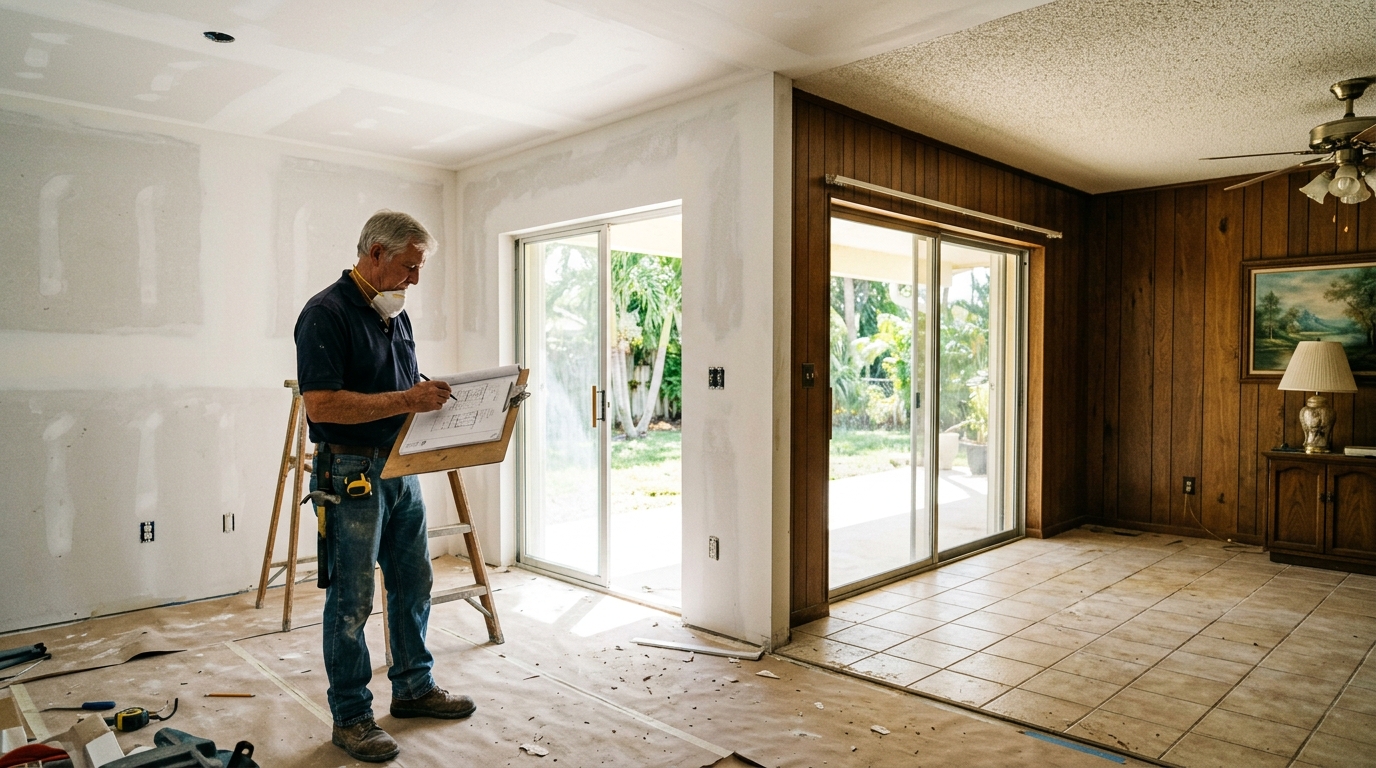
The first thing we do on an older home renovation is the discovery phase. Demo reveals things that no inspection report fully captures.
Popcorn ceilings. Common in homes built through the late 1980s and sometimes into the 1990s. The concern is not the texture itself but whether it contains asbestos. Anything installed before 1980 has a real chance of it. The EPA’s guidelines on asbestos in homes are clear: test before you disturb it. We always recommend a certified test before any ceiling demo on homes of that era.
Knob-and-tube or aluminum wiring. Homes from the 1970s and earlier sometimes have wiring that does not meet modern code. This becomes relevant the moment you start opening walls for a renovation, because code requires bringing exposed systems up to current standards.
Original drywall or plaster. Many Florida homes from this period used materials that do not respond well to the humidity that has worked its way through them over decades. We often find soft spots, previous water intrusion that was painted over, or plaster that is separating from the lath.
Insulation gaps. Florida homes of this era were not built to the insulation standards we apply today. When you open walls during an interior renovation, it is the ideal time to address this. Upgrading insulation during a remodel adds minimal cost and makes a meaningful difference in energy bills and comfort.
None of this is catastrophic. But it all has to be accounted for in your scope and your budget before work starts, not discovered on week three.
Where to Start the Renovation
This is the question we get most often, and the honest answer is: it depends on your goals. But there is a general logic that holds true across most older Florida home renovations.
Start with systems, not surfaces. Updating a kitchen is exciting. But if the plumbing in that kitchen is original cast iron with deteriorating joints, putting a beautiful new kitchen on top of it is asking for a future disaster. We always recommend addressing structural or mechanical issues first.
Prioritize moisture-prone spaces. Bathrooms and kitchens in older Florida homes have almost always had some water intrusion over the decades. Sometimes it was caught and repaired. Often it was not. Renovating these spaces first, with proper waterproofing and moisture-resistant materials, protects everything that comes after.
Then move to the living spaces. Once systems and wet areas are addressed, the living room, dining room, bedrooms, and hallways become the opportunity to transform the feel of the whole home. New drywall, updated trim, modern interior doors, fresh paint, new flooring. These are the upgrades that make the house feel like yours.
For older homes specifically, finish carpentry is one of the highest-return investments. Replacing hollow-core doors with solid-core, adding real wood casing and base trim, and putting in proper crown molding takes a dated Florida ranch and makes it feel genuinely elevated.
The Permit Reality in Sarasota
I want to address this directly because we see homeowners get into trouble here. Sarasota County requires permits for structural changes, plumbing modifications, electrical work, and HVAC. When you are renovating an older home, the scope almost always touches at least one of these categories.
The permit process adds time. It is also the thing that protects your investment and your ability to sell the home later. Unpermitted renovation work in Florida triggers real problems at closing. Buyers’ lenders will flag it. Insurance companies will ask about it. And if something goes wrong in an unpermitted space, your homeowner’s policy may not respond.
We pull permits on every applicable scope. Full stop. If a contractor tells you they can save time and money by skipping the permit, they are saving their time and creating your risk.
Budgeting an Older Home Interior Renovation
Full interior renovations on older Florida homes run a wide range depending on scope, finishes, and what is found during demo. A realistic budget for a comprehensive interior renovation of a 1,500 to 2,000 square foot home in Sarasota sits between $60,000 and $120,000 for a full scope involving multiple rooms, system updates, and quality finishes.
Room-by-room renovations are more manageable. A kitchen remodel is its own project. A bathroom is its own project. The advantage of tackling an older home in phases is that you can manage the budget over time while still making real progress.
According to Remodeling Magazine’s annual Cost vs. Value report, kitchen and bathroom remodels in the South Atlantic region consistently show strong return on investment, especially when they bring an older home up to contemporary standards.
Let Us Walk Through It With You
If you have an older Florida home and you are trying to figure out where to start with an interior renovation, the best first step is a walkthrough with someone who has done this kind of work many times. We can tell you what is likely behind the walls, what the realistic scope looks like, and how to phase the project in a way that makes sense for your budget.
Reach out through our contact page and we will set that up. No commitment, just a real conversation about your home and what it needs.