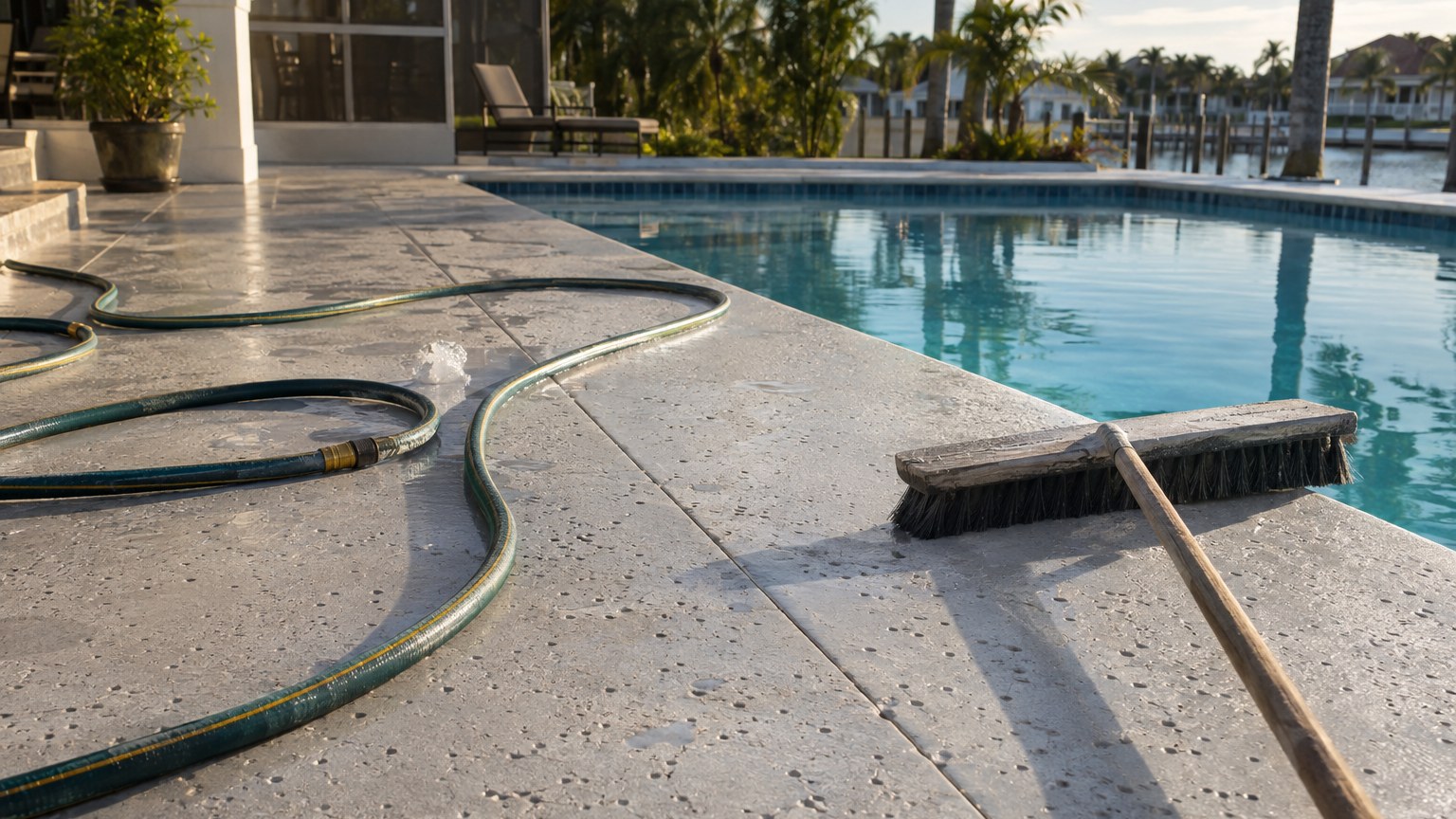
If you have walked barefoot around a pool deck in Sarasota and noticed a soft, speckled surface with tiny pits scattered across it, you have probably met a salt finish. Salt finish concrete is a decorative texture made by pressing coarse rock salt into freshly poured concrete, then washing the salt away once the slab sets. What is left behind is a pattern of small, shallow dimples that looks a little like natural stone and gives your feet something to grip.
It is one of the simplest decorative finishes out there, and it fits Florida living really well. Here is how it works, what it is good at, and what to keep in mind before you choose it.
What Is a Salt Finish on Concrete?
A salt finish on concrete is a surface texture, not a coating or a stamp. The concrete itself is the same mix you would use for a plain slab. The difference comes in the last stage of finishing, when grains of rock salt are spread over the wet surface and pushed in just enough to leave a mark.
Once the salt dissolves or gets rinsed off, each grain leaves a little crater. The result is subtle and clean. It is more refined than a broom finish, with its straight lines, and much quieter than stamped concrete, which copies the look of brick, slate or stone with a full pattern. If you want to compare it side by side with other options, our guide to the pros and cons of different concrete finishes lays them all out.
How a Rock Salt Concrete Finish Is Made
The process is easy to describe but depends heavily on timing. After the concrete is placed and leveled, it is floated and troweled smooth. Some finishers add a light broom pass first. Then, while the surface is still soft enough to take an impression, coarse rock salt is broadcast evenly across it by hand.
Next, the salt is pressed into the surface with a roller or a float. It should sink in partway, not disappear. The slab is then left to cure, and after roughly a day the salt is washed out with water, often with a pressure washer. The grains that dissolved or popped loose leave behind the speckled texture.
Timing is where most problems start. Spread the salt too early and it sinks too deep or gets lost. Too late and it barely marks the surface. Uneven spreading leaves bare patches or clusters that stand out once the slab dries. That is why we see this as a job where experience on the trowel really shows.
Why Salt Finished Concrete Works for Florida Patios and Pool Decks
Salt finished concrete earns its popularity here for a few practical reasons:
- Better grip when wet. The texture adds traction around pools, outdoor showers and lanais.
- A softer look. The speckled surface feels natural and relaxed, which suits coastal homes.
- An affordable upgrade. It adds a decorative touch without the extra labor of a full stamped pattern.
- Climate fit. In colder places, water can freeze in those little pits and chip the surface. Our mild winters make that much less of a worry.
A salt finish patio also makes a natural base for an outdoor kitchen. Florida weather means you can actually live outside, and a textured slab ties in nicely with custom concrete countertops. If that is on your wish list, take a look at our outdoor kitchens page.
It is not perfect for every space. The pits can collect dirt and leaf debris, so it needs an occasional rinse. A good sealer also helps, and our tips on caring for concrete surfaces cover cleaning and sealing in more detail. If you want a bolder pattern or color story, stamped concrete may be the better match.
Frequently Asked Questions
Is salt finish concrete slippery?
Not usually. The small pits give bare feet and shoes more grip than a smooth troweled surface, which is why it is common on pool decks. Keep in mind that some glossy sealers can make any concrete slicker, so ask about a sealer with a slip resistant additive.
How long does a salt finish on concrete last?
Because the texture is pressed into the slab itself rather than applied on top, it lasts as long as the concrete stays sound. Heavy wear and harsh cleaning can soften the edges of the pits over time. Regular rinsing and resealing every few years help the texture keep its crisp look.
Can a salt finish be colored?
Yes. Concrete can be tinted with integral color mixed into the batch or colored on the surface, and the salt texture works on top of either. Lighter, sandy tones are a popular pick for outdoor spaces because they look natural and stay cooler underfoot than dark colors.
Does salt finished concrete need sealing?
Sealing is not required, but it is a smart idea. A sealer helps the surface resist stains, mildew and wear, which matters with Florida sun and humidity. Most sealers need to be reapplied every few years.
Thinking About Salt Finish Concrete for Your Home?
A salt finish on concrete gives a patio, walkway or pool deck a relaxed, stone-like texture that stays comfortable under bare feet. Since the whole look comes down to when the salt goes down and how evenly it is spread, choosing the right crew is half the decision.
We pour and finish concrete for homeowners throughout Sarasota and Manatee County, and our Florida CBC License #CBC1269931 means a licensed contractor is behind your slab from start to finish. For more on planning ahead, our article on residential concrete work walks through what to sort out before the trucks arrive. Ready to see if this finish fits your outdoor space? Call (941) 203-3339.