If you are asking about drywall installation cost, here is the honest answer: it depends on a handful of factors you can actually understand before you get a quote. Most drywall work is priced by the square foot of wall and ceiling surface, with standard board and a basic finish sitting at the lower end. Specialty board, tall ceilings, heavy demolition or a very smooth finish can push a job well above that.
Labor usually carries a big share of the total, because hanging and finishing drywall well takes skill and time. We hang and finish drywall for homeowners and business owners across Sarasota and Manatee County, so we see the same questions come up again and again. If you want typical published figures for our state, our Florida drywall cost breakdown covers them. This guide walks through what shapes pricing, how to read a quote, and what to ask so every quote you collect covers the same work.
What Drives Drywall Installation Cost
Most contractors start with square feet of wall and ceiling surface, not floor area. A 12 by 12 room has 144 square feet of floor, but its walls and ceiling add up to far more surface that needs board, tape and mud. From there, the details of the space start to matter.
Here are the main things that change the price of a drywall job:
- Total area. More surface means more drywall sheets, more mud and more hours. Larger jobs can sometimes be more efficient per square foot because the crew sets up once.
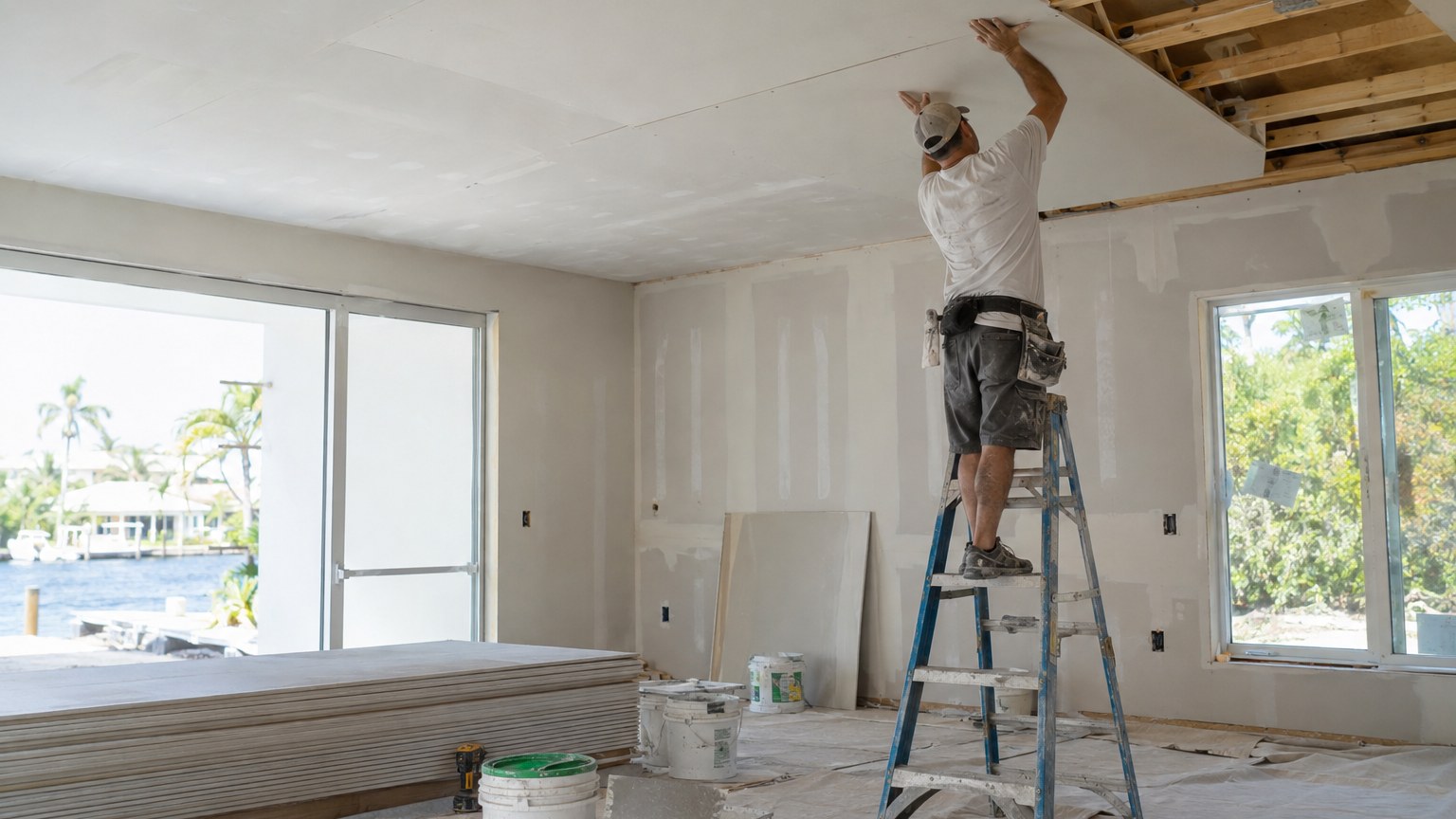
- Ceilings and height. Ceilings are harder to hang than walls, and tall or vaulted ceilings may need scaffolding or lifts. That adds time and equipment.
- Layout complexity. Every outside corner needs corner bead, and every window, door, outlet and soffit needs careful cutting. A simple box room is quicker than a room full of angles and openings.
- Existing conditions. Removing old drywall, hauling it away, or fixing out of square framing before new board goes up all add labor.
- Materials and delivery. Board type, quantity and getting sheets into the building matter. Carrying sheets up stairs or into a tight condo unit takes longer than unloading into an open garage.
- Finish level. How smooth the final surface needs to be has a big effect on hours, which we cover next.
How Finish Level and Board Type Change Pricing
Hanging the board is only part of the work. Taping, mudding, sanding and repeating is where much of the time goes, and the level of finish you choose decides how many coats and how much sanding are involved. Industry finish levels run from Level 0, which is just hung board, up to Level 5, which adds a skim coat over the entire surface for a very smooth look. A garage or utility space might only need a basic finish, while living areas with strong side lighting or glossy paint often call for a higher level.
Board type matters too. Standard half inch board is common on residential walls, while thicker 5/8 inch board is often used on ceilings and where fire rated assemblies are required. Moisture resistant board is a smart choice for bathrooms, laundry rooms and other damp areas, and specialty products such as sound dampening or impact resistant board cost more than standard sheets. Here in Florida, humidity is a real factor, so it is worth talking through board choices for damp rooms before you settle on materials.
Residential vs Commercial Drywall Pricing
Homes and commercial spaces are priced differently because the work itself is different. Residential jobs often involve wood framing, finished living spaces that need protection, and homeowners who are living in or near the work area. Commercial buildouts more often use metal framing, larger open areas, fire rated wall assemblies, and schedules built around tenants, inspections or opening dates.
We handle both residential drywall and commercial drywall, framing in wood and metal, and metal framing, drywall and carpentry for other builders through our subcontracting services. Each of those setups affects how a job is scoped and priced.
How to Read a Drywall Quote
Two quotes for the same room can look wildly different, and the cause is usually what each one includes. A low number that leaves out finishing, cleanup or disposal is not really cheaper. When you compare quotes, check that each one clearly states:
- The total square footage and whether ceilings are included.
- The board type and thickness for each area.
- The finish level and any texture to match existing walls.
- Whether demolition, haul away and debris disposal are covered.
- Who is responsible for priming or painting after the finish coat.
- Who physically does the work and the payment schedule.
The cheapest quote means nothing if the crew vanishes halfway through and your walls sit half taped for weeks. Ask how the schedule works and who you call with questions. We believe in crews that actually show up, no cutting corners and no disappearing mid-job. It also pays to confirm the contractor is licensed and insured. We are a licensed, bonded and insured company, holding Florida CBC License #CBC1269931, and we are happy to walk you through any line in our quotes.
Frequently asked questions
How much does it cost to install and finish drywall?
Most contractors price installing and finishing drywall together by the square foot of wall and ceiling surface. Standard board with a basic finish sits at the low end of the range, while moisture resistant or specialty board, tall ceilings and a Level 5 finish push it higher. Finishing often takes as much time as hanging, or more, because each coat of mud needs to dry and be sanded.
How do contractors estimate the cost to install drywall?
Most estimates start by measuring wall and ceiling surface in square feet, then adjusting for ceiling height, corners, openings and access. The contractor then adds materials such as sheets, tape, mud and corner bead, plus any demolition or disposal. A site visit gives a far more accurate number than a phone estimate.
Does removing existing drywall add to drywall installation pricing?
Yes, tearing out existing drywall adds labor and disposal to the job. Removal can also uncover issues like damaged framing, moisture or mold that need attention before new board goes up. A good quote should say how those surprises will be handled.
Does matching existing wall texture add to drywall installation cost?
It usually does. Blending new board into existing knockdown or orange peel texture takes extra time and a practiced hand so the patch disappears once it is painted. If you are going for smooth walls instead, the extra cost shows up in a higher finish level rather than texture work.
Getting a Real Number for Your Project
Per square foot pricing is a useful starting point, but the true drywall installation cost for your home or business comes down to the details of the room and how smooth you want the walls to look. The fastest way to a reliable number is a contractor who measures the job, explains the scope in plain language, and puts it all in writing. Just as important, you want a crew that shows up when it says it will and stays until the last wall is done.
Whether you are finishing a new addition, replacing damaged walls or building out a commercial space anywhere from Sarasota to Manatee County, we would be glad to take a look. Contact us to talk through your project and get a clear, detailed quote.