Concrete is no longer just a structural material—it’s a design element that can be cast or molded into any form required for your project. Whether you’re installing a driveway, patio, or walkway, the type of finish you choose affects the look, performance, and maintenance of the surface. Concrete has been used historically and in modern times not only as poured slabs but also in the form of blocks, which serve as durable masonry units in construction. Its widespread use extends around the world, with concrete finishes gaining popularity globally as techniques and materials have improved—not immediately, but gradually over time.
Concrete finishes are suitable for a wide range of applications, including those that require thermal mass and energy efficiency, as concrete and masonry can absorb and store heat, contributing to indoor comfort and energy savings. Color or aggregates can be mixed into the concrete during preparation to achieve different effects and styles. The installation and customization of concrete finishes involve varying levels of labor, which impacts both the cost and the project timeline. When choosing a finish, it’s important to understand the market for concrete finishes, as trends and regional preferences can influence your options.
Unlike wood, which requires regular maintenance such as staining and board replacement, concrete offers a low-maintenance alternative for outdoor surfaces. Additionally, concrete surfaces absorb and reflect heat differently than other materials, affecting comfort and energy efficiency in outdoor spaces. Proper site preparation is crucial—removing grass and other vegetation before pouring concrete ensures a stable foundation and helps prevent weed problems in the future.
Here’s a guide to the most common concrete finishes, along with their pros and cons to help you make an informed decision.
Introduction to Concrete Finishes
Concrete finishes play a crucial role in the construction industry, transforming a basic composite material into a surface that is both functional and visually appealing. Made from Portland cement, sand, gravel, and other aggregates, concrete is renowned for its strength and versatility. This durable material forms the solid foundation of countless structures, from residential driveways to commercial buildings. With the right finishing techniques, concrete surfaces can be customized to suit a variety of needs—whether you want a sleek, modern look or a textured, slip-resistant surface. The various benefits of concrete finishes include enhanced durability, improved appearance, and suitability for a wide range of applications. For homeowners and builders alike, understanding the options available makes it easier to choose the best finish for any project, ensuring a surface that is both attractive and built to last.
1. Broom Finish
Overview:
A broom finish is created by dragging a broom across the surface of freshly poured concrete to create fine, uniform lines. It’s one of the most popular finishes for residential driveways and walkways.
Pros:
Provides excellent slip resistance Cost-effective and quick to apply
Durable for high-traffic areas
Cons:
Basic appearance, limited aesthetic appeal
Can trap dirt in grooves if not cleaned regularly
Best For:
Driveways, sidewalks, and pool decks needing traction.
2. Stamped Concrete
Overview:
Stamped concrete mimics the look of stone, brick, slate, or tile by imprinting patterns into the wet surface and often adding color. Unlike pavers, stamped concrete has a seamless surface that reduces weed growth and shifting.
Pros:
Highly customizable with patterns and colors
Offers a high-end, decorative look
Durable when properly sealed
Cons:
More expensive than standard finishes
Requires resealing every few years, but resealing typically only takes a few hours, making it a convenient maintenance task
Can be slippery if not textured correctly
Best For:
Patios, entryways, and decorative outdoor spaces.
3. Exposed Aggregate
Overview:
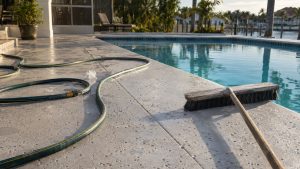
This finish reveals small stones and pebbles on the concrete surface by washing away the top layer of cement paste after pouring.
Pros:
Slip-resistant and durable
Visually interesting texture
Low maintenance
Cons:
Surface may be rough for barefoot use
Limited repair options if damaged
Requires sealing to prevent staining
Best For:
Driveways, walkways, and pool surrounds.
4. Smooth (Trowel) Finish
Overview:
A smooth finish is achieved by using a steel trowel to create a sleek, polished surface.
Pros:
Clean and modern appearance
Ideal for interior use
Easy to clean and maintain
Cons:
Very slippery when wet
Not ideal for outdoor use or sloped areas
Can show imperfections easily
Best For:
Garage floors, basements, and indoor slabs.
5. Salt Finish
Overview:
A salt finish involves pressing coarse rock salt into the surface of fresh concrete, then washing it away to create small pits and texture.
Pros:
Subtle texture with added slip resistance
Decorative look with minimal cost
Unique, non-uniform pattern
Cons:
Less common, harder to find experienced installers
May require frequent sealing
Can trap dirt in indentations
Best For:
Pool decks and decorative patios.
6. Polished Concrete
Overview:
Polished concrete is mechanically ground, honed, and polished to a glossy finish using progressively finer abrasives.
Pros:
High-end, reflective appearance
Extremely durable and low-maintenance
Long-lasting with no need for waxing
Cons:
Higher installation cost
Time-consuming process
Can be slippery when wet
Best For:
Interior floors in modern homes or commercial spaces.
Cost Considerations
When planning a concrete project, cost is always a key factor. The price of concrete installation typically ranges from $4 to $10 per square foot, depending on the size of the area, the complexity of the finish, and the materials selected. While decorative finishes or intricate patterns may increase the initial investment, concrete remains a cost-effective choice compared to other construction materials like asphalt or brick. Its low maintenance requirements and long lifespan can help homeowners save money over time, making it a smart investment for driveways, patios, and other surfaces. By carefully weighing the pros and cons of different finishes and installation methods, you can determine if concrete is the right choice for your project—balancing upfront costs with long-term durability and minimal upkeep.
Maintenance and Repair
Concrete structures are known for being highly durable and low maintenance, but regular care is essential to maximize their lifespan and appearance. To keep your concrete looking its best, it’s important to seal the surface to protect against weather conditions, moisture, and cracking. Promptly repairing any damage, such as chips or cracks, helps prevent further deterioration and costly repairs down the road. Routine cleaning and periodic inspections allow homeowners to spot potential issues early, ensuring the surface remains both attractive and functional. With the right know-how and maintenance practices, concrete can provide a long-lasting, durable surface that stands up to daily wear and tear—making it an ideal choice for those seeking a reliable and easy-to-maintain material for their structures.
Environmental Considerations
Concrete offers several environmental benefits that make sense for today’s construction industry. Thanks to its excellent thermal mass and energy efficiency, concrete can help regulate indoor temperatures and reduce energy consumption in buildings. Many modern concrete mixes incorporate recycled materials, such as crushed glass or reclaimed aggregate, which helps minimize waste and conserve natural resources. However, it’s important to recognize that the production of concrete does have environmental drawbacks, including significant energy use and greenhouse gas emissions. By choosing sustainable concrete options and adopting eco-friendly construction practices, homeowners and builders can enjoy the benefits of this versatile material while reducing their environmental footprint. Considering both the advantages and challenges of concrete makes sense when planning any construction project.
Durability and Longevity
One of the greatest strengths of concrete is its exceptional durability and long life. Properly installed and maintained concrete structures can withstand harsh weather conditions, heavy loads, and daily use for decades. The use of reinforcement materials like steel, along with techniques such as cut joints, helps prevent cracking and enhances the overall strength of the surface. Concrete’s resistance to erosion and wear makes it a highly durable material for foundations, driveways, and commercial spaces. With minimal maintenance, concrete remains solid and reliable, providing a low-maintenance solution that stands the test of time. For homeowners and builders seeking a material that offers both immediate and long-term benefits, concrete is often the right choice for creating structures that last.
Choosing the Right Finish
Your ideal concrete finish depends on:
Location (indoor vs. outdoor)
Purpose (decorative vs. functional)
Budget
Maintenance preference
For example, a stamped concrete patio enhances curb appeal, while a broom finish driveway delivers traction and longevity.
Need Help Choosing the Right Finish?
At Optima Construction Group, we specialize in custom concrete installations that combine durability with design. Whether you’re updating your outdoor space or building new, our concrete experts will guide you through finish options and deliver top-quality results.
Call us today at (941) 536-5607 Email: admin@optimaconstructiongroup.com
From stamped concrete patios to exposed aggregate driveways—trust your project to Sarasota’s leading concrete contractors.